Board-Level Cyber Reporting: What CEOs, CFOs, and CISOs Need to Get Right in 2026
Cyber reporting to the board has a consistency problem: updates arrive regularly but rarely deliver the forward-looking intelligence executives need to act. This piece breaks down why the disconnect exists, how it affects CEOs, CFOs, and CISOs differently, and what decision-ready threat intelligence should actually look like at board level.


Key Takeaways
- Most boards receive cybersecurity updates that describe the past rather than inform future decisions.
- CEOs, CFOs, and CISOs each face distinct but interconnected exposure to cyber risk, requiring tailored intelligence.
- The gap between technical security data and board-level decision-making has direct financial and operational consequences.
- Analyst-led, sector-specific threat intelligence closes that gap by delivering decision-ready insights to the right people.
What is board-level cyber reporting, and why is it failing?
Board-level cyber reporting refers to the structured communication of cybersecurity risk, exposure, and threat intelligence to executive leadership and non-executive directors. In practice, it has followed a predictable and largely ineffective pattern: technical metrics, incident counts, and compliance checklists presented in language that resonates with security teams but leaves CEOs, CFOs, and non-executive directors without the context they need to make decisions.
The result is a structural disconnect at precisely the level where it matters most. Boards are receiving cybersecurity updates with increasing regularity, but regularity is not the same as relevance. According to the 2026 CISO-Board Engagement Report, just 29% of board directors describe the cybersecurity updates they receive as very effective, and 53% consider them only somewhat effective. The gap is not one of frequency, it is one of forward-looking intelligence.
Why does cyber risk matter at board level?
Cyber incidents carry direct, measurable consequences across every dimension of business performance: financial, reputational, regulatory, and operational. The numbers make the case plainly:
- 72% of leaders report an increase in organisational cyber risks, with ransomware remaining a top concern.
- 71% of chief risk officers expect severe organisational disruptions in the year ahead due to cyber risks and criminal activity.
- 60% of business and technology leaders rank cyber risk investment in their top three strategic priorities.
- 41% of boards are already addressing cyber issues on a monthly basis, a cadence reserved for critical enterprise risks rather than functional IT updates.
One in three CEOs cite cyber espionage and intellectual property theft as their top cyber risk. CFOs are increasingly accountable for quantifying that exposure alongside financial risk. And CISOs, despite being the most informed voice in the room, frequently find their expertise is not translating into the board decisions and resources they need.
As CYJAX outlined in its 2026 CISO agenda analysis, fewer than a third of CISOs believe they have sufficient funding to meet their cybersecurity objectives, and a majority report that budget delays have directly contributed to a successful cyber incident. The communication failure between security leadership and the board is not just a cultural inconvenience. It has real operational and financial consequences.
How does cyber risk affect each executive role differently?
- CEO: Accountable for organisational resilience. A major incident following board-level inaction can constitute a governance failure with regulatory, legal, and reputational consequences at the highest level.
- CFO: Must quantify cyber risk in financial terms for insurance, investment, and regulatory reporting. Cyber-enabled fraud and ransomware carry direct balance sheet impact. Inadequate visibility leads to inaccurate disclosures and shareholder exposure.
- CISO: Needs board mandate to act decisively. As CYJAX explored in its board-CISO alignment blog, translating technical insight into board language is the CISO's most critical communication challenge in 2026.
What is the difference between cyber data and cyber intelligence at board level?
Most board-level cyber reporting describes the past: what happened, which vulnerabilities were patched, how many alerts were triaged. What it rarely delivers is visibility into what is coming; the threat actors targeting a specific sector, the attack vectors gaining traction, or the intelligence that should shape next quarter's risk decisions.
Board-level cyber intelligence is threat data that has been validated, contextualised, and structured to answer executive questions about risk exposure, likely impact, and required decisions. It is distinct from raw security data, which describes events without informing action.
Boards cannot oversee cyber risk effectively if they only interact with the CISO during annual presentations or after a crisis. Sustained, structured engagement helps directors view cybersecurity as an enterprise-wide strategic concern rather than a technical sidebar. Only 29% of boards include a member with cybersecurity expertise, which translates intelligence into business language, not optional but essential.
Boards are not asking for more technical detail. They are asking three questions:
- What threats are most likely to affect us?
- What is our current exposure?
- What decisions do we need to make?
How does CYJAX deliver board-level threat intelligence?
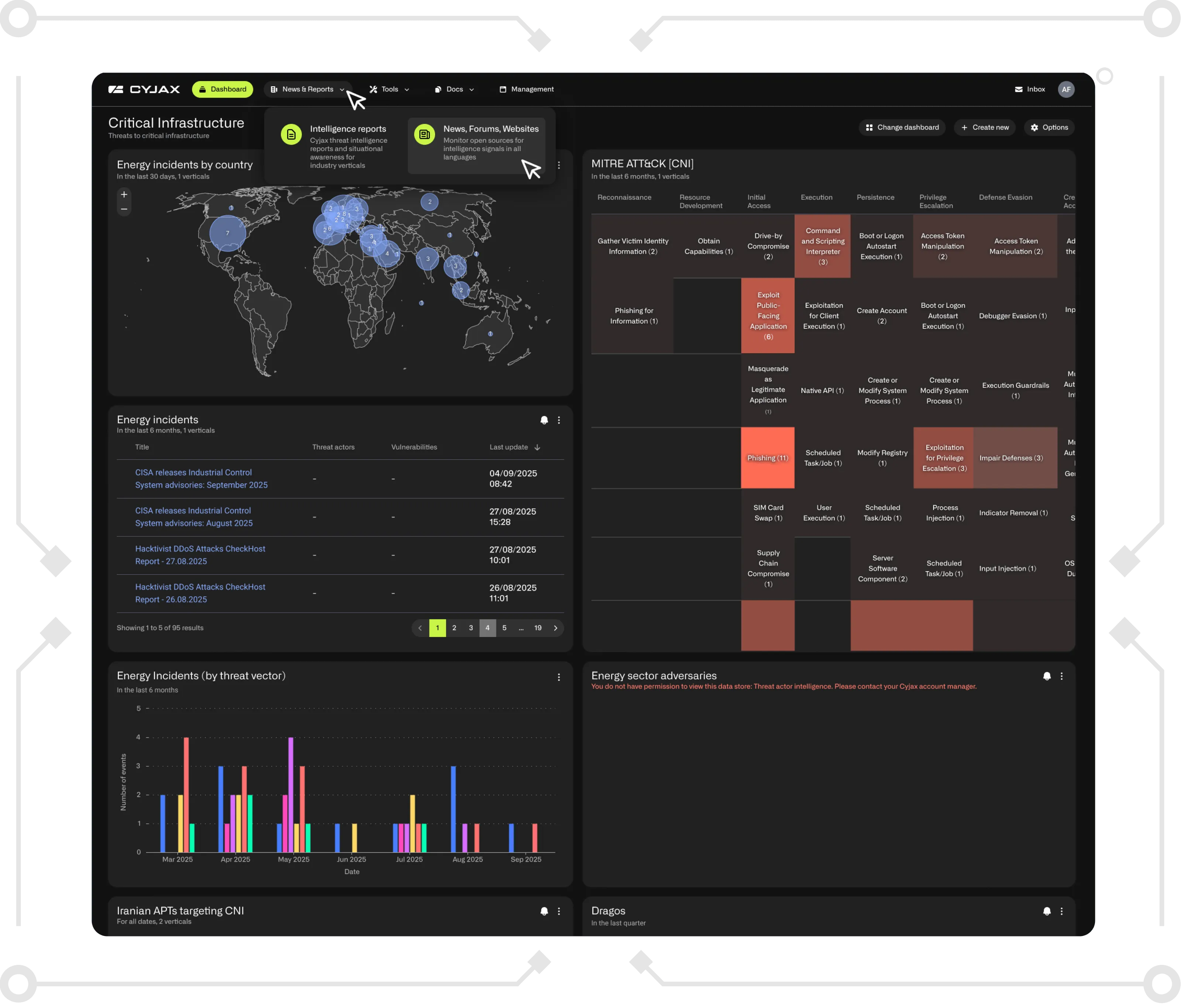
CYJAX delivers analyst-led threat intelligence that closes the gap between security operations and executive decision-making. Every insight is human-validated, sector-relevant, and structured to support board-level decisions.
- Tailored intelligence reporting: Reports aligned to your industry, risk profile, and specific threat exposure. Raw intelligence is transformed into actionable insights with clear guidance on potential impact and recommended next steps.
- Analyst-led approach: Experienced analysts enrich every piece of intelligence, ensuring what reaches the board is accurate, contextual, and usable rather than machine-generated noise.
- Broad source coverage: Continuous monitoring across open, deep, and dark web sources including criminal forums and threat actor communications, surfacing risks before they become incidents.
- Industry-relevant alerts: Sector-specific threat profiling so leadership receives intelligence calibrated to their operating environment, not a generic global digest.
- Decision-ready insights: Intelligence structured to answer the questions boards actually ask: what does this mean for us, what is the likely impact, and what should we do?
CEOs, CFOs, and CISOs each need to be part of this intelligence ecosystem. An attack that begins as a technical compromise rapidly becomes a financial, regulatory, and reputational event. When the right intelligence reaches the right people, the CEO understands the continuity implications, the CFO can quantify and disclose exposure accurately, and the CISO gains the mandate to act.
Book a demo or request an intelligence briefing to see how CYJAX delivers threat intelligence aligned to your sector, your risk profile, and your executive agenda.
Recommended for you



Get Started with CYJAX CTI
Empower Your Team. Strengthen Your Defences.CYJAX gives you the intelligence advantage: clear, validated insights that let your team act fast without being buried in noise.