Threat Intelligence Platforms: From Data to Actionable Insight
Learn how a Threat Intelligence Platform (TIP) centralises, enriches, and prioritises threat data to deliver actionable cyber intelligence at scale.


Introduction
Threat intelligence is a core component of modern cybersecurity. While organisations increasingly recognise its value, many continue to struggle with effectively managing and operationalising intelligence at scale.
Reliance on fragmented feeds, reports, and static documentation often leads to information overload, duplicated effort, and limited visibility into which threats truly matter. This makes it difficult for security teams to convert intelligence into timely, actionable decisions.
A Threat Intelligence Platform (TIP) addresses these challenges by centralising the collection, enrichment, analysis, and prioritisation of threat intelligence. By providing context and aligning intelligence with operational and strategic objectives, a TIP enables organisations to respond more effectively in a complex and fast-moving threat landscape.
How Does a Cyber Threat Intelligence Platform Work?
A TIP supports the full threat intelligence lifecycle, transforming raw data into high-confidence intelligence that drives security operations.
A TIP typically works by:
- Aggregating threat data
Collects intelligence from internal and external sources, including OSINT, commercial feeds, security telemetry, information-sharing communities, government advisories, and open, deep, and dark web monitoring. This provides broad visibility across both technical indicators and adversary activity.
- Normalising and enriching intelligence
Structures data into standardised formats and enriches it with context such as threat actors, malware families, tactics, techniques and procedures (TTPs), kill chain stages, and historical sightings. This reduces noise, removes duplication, and adds meaningful context.
- Correlating and analysing threats
Connects indicators across sources to identify patterns, relationships, and emerging risks. Using automation, analytics, and human expertise, a TIP prioritises intelligence based on relevance and potential impact.
- Disseminating intelligence across teams and tools
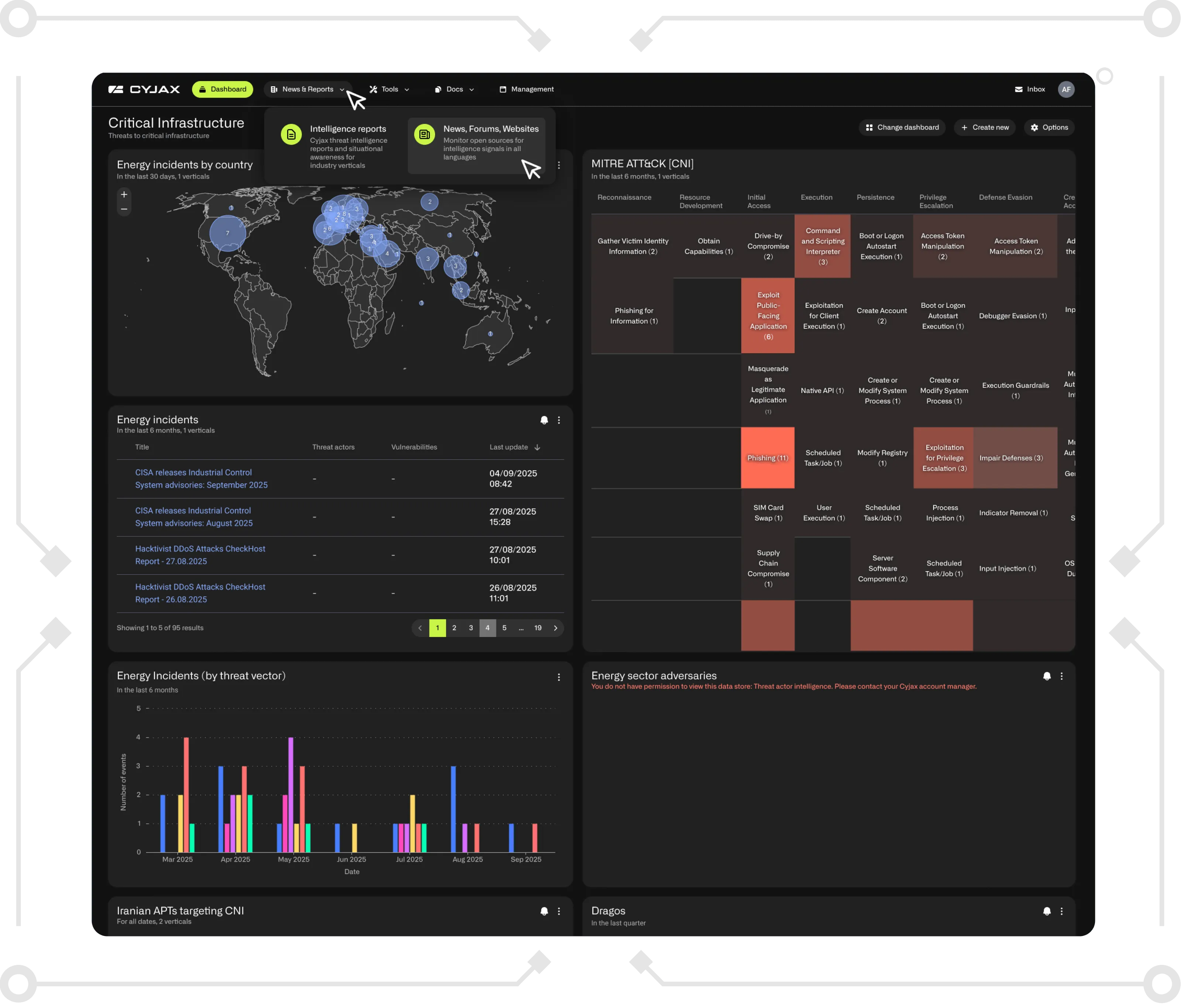
Integrates intelligence into SIEM, SOAR, EDR, and other security technologies, while delivering insights to security operations, incident response, and leadership teams through dashboards, alerts, and reports.
- Enabling automated and coordinated response
Embeds intelligence into workflows to support faster detection, containment, and mitigation, helping organisations move from insight to action more efficiently.
CYJAX follows this model by combining human-led intelligence with automated collection and analysis. The CYJAX Intelligence Platform gathers, processes, and enriches data from open, deep, and dark web sources, alongside technical feeds and geopolitical monitoring. This enables organisations to access high-fidelity intelligence at speed, strengthen cyber defence, and respond effectively to risks such as dark web activity, supply chain exposure, vulnerability exploitation, and brand or data misuse.
Types of Threat Intelligence Supported by a TIP
A Threat Intelligence Platform supports multiple levels of intelligence, each serving a distinct purpose within an organisation’s security strategy.
Tactical threat intelligence focuses on technical indicators associated with active or imminent threats. It supports immediate detection and response activities by informing security controls and operational teams.
Operational threat intelligence provides insight into how threat actors operate, including their tools, infrastructure, and techniques. This level of intelligence helps organisations anticipate attacker behaviour and strengthen defensive planning.
Strategic threat intelligence offers a high-level view of the threat landscape, highlighting trends, emerging risks, and broader geopolitical or industry-specific developments. It supports executive decision-making, risk management, and long-term security investment planning.
By bringing these intelligence types together within a single platform, a TIP enables organisations to align tactical actions with operational awareness and strategic objectives.
Why This Matters to CISOs
For CISOs, the challenge is no longer a lack of threat data, but the ability to turn intelligence into timely, informed decisions. A Threat Intelligence Platform provides the visibility, prioritisation, and context required to understand which threats pose genuine business risk. By aligning threat intelligence with operational workflows and strategic objectives, a TIP enables CISOs to reduce uncertainty, improve response readiness, and demonstrate measurable value from security investments.
Why Choose CYJAX
The CYJAX Intelligence Platform delivers analyst-enriched, high-fidelity threat intelligence that goes beyond raw data to deliver clarity, context, and prioritised insights organisations can act on immediately. It combines automated data collection with expert human analysis to monitor emerging threats from open, deep, and dark web sources, technical feeds, and geopolitical signals, helping teams detect, assess, and respond faster and with greater confidence. With tailored alerts, seamless integration into security stacks, and dashboards built for both operational teams and leadership, CYJAX helps reduce risk, improve resilience, and elevate your security decision-making.
Ready to see CYJAX in action?
👉 Book a demo to experience actionable threat intelligence that strengthens your defences and accelerates your response.
Recommended for you



Get Started with CYJAX CTI
Empower Your Team. Strengthen Your Defences.CYJAX gives you the intelligence advantage: clear, validated insights that let your team act fast without being buried in noise.