Cybersecurity Awareness Month 2026: Why Awareness Needs to Be Intelligence-Led
Cybersecurity Awareness Month has encouraged safer online behaviour every October since 2004, but AI-enabled attacks are changing what awareness needs to look like. This article looks at the campaign's history, the latest UK threat data, and why organisations should ground their awareness efforts in real threat intelligence.


For more than two decades, governments, businesses and security specialists have used the month of October to focus attention on cybersecurity and the protection of personal and organisational data. As organisations move more of their operations into the cloud and onto connected platforms, attackers have increasingly turned their attention from infrastructure to the people who use it. Every employee with an inbox, a login or access to a payment system is a potential entry point, which gives cyber criminals a constantly expanding attack surface from which to steal credentials, data and money.
Educating the people who are targeted remains one of the most effective defences available. When staff know how to recognise a malicious message, refuse a suspicious request and report what they have seen, they protect both themselves and the wider organisation. Cybersecurity Awareness Month exists to reinforce that message every October, and in 2026 the case for doing it well has never been stronger.
What is Cybersecurity Awareness Month?
Cybersecurity Awareness Month was launched by the National Cybersecurity Alliance and the U.S. Department of Homeland Security in October 2004 as a wide-ranging effort to help people stay safer and more secure online. In its early years, the advice focused on simple habits such as updating antivirus software twice a year, much like changing the batteries in a smoke alarm.
The campaign has grown considerably since then. It is now a partnership between the National Cybersecurity Alliance and the Cybersecurity and Infrastructure Security Agency (CISA), and it has adopted "Secure Our World" as a recurring theme, built around four core practices: recognising and reporting phishing, using strong passwords, turning on multifactor authentication and keeping software updated. In Europe, the equivalent European Cybersecurity Month has run each October since 2012, and UK organisations across the public and private sectors now use the month to refresh their own training and communications.
Why does Cybersecurity Awareness Month still matter?
The core message of the campaign may be familiar, but the UK data shows that the threat it addresses is far from solved. According to the government's Cyber Security Breaches Survey 2025/2026, 43% of businesses and around 28% of charities experienced a cyber security breach or attack in the previous 12 months, which equates to roughly 612,000 UK businesses. The figures are considerably higher for larger organisations, at 65% of medium and 69% of large businesses.
The human element sits at the centre of this picture. Phishing remained by far the most common type of attack, affecting 38% of businesses, and was also identified as the most disruptive form of attack by 69% of businesses and charitiesthat had experienced one. Organisations interviewed for the survey also felt that phishing had become easier for attackers to carry out, which they believed was driving up attack volumes.
At a national level, the scale of serious incidents is growing. The NCSC Annual Review 2025 reported that 204 of the incidents it handled were nationally significant, up from 89 the previous year, and that highly significant incidents rose by almost 50%, marking the third consecutive annual increase.
How is AI changing the cyber threat?
Artificial intelligence is accelerating the pace at which attackers can operate, and this is where traditional awareness approaches begin to show their limits. The NCSC's assessment of the impact of AI on cyber threat to 2027 concludes that AI will almost certainly continue to make parts of cyber intrusion operations more effective and efficient, increasing both the frequency and intensity of cyber threats. It also warns of a likely digital divide between systems that keep pace with AI-enabled threats and a large proportion that remain more vulnerable.
The speed of exploitation is also changing. The NCSC notes that the time between a vulnerability being disclosed and exploited has already shrunk to days, and that AI will almost certainly reduce it further. For employees, the practical consequence is that phishing emails, fake login pages and impersonation attempts are becoming more convincing, more personalised and more frequent.
Many organisations are adopting AI faster than they are securing it. Around 31% of businesses were using, adopting or actively considering AI, yet only 24% of that group had cyber security practices in place to manage the associated risks.
Why awareness alone is no longer enough
Awareness training is only effective when it reflects the threats people are likely to face. Generic advice about suspicious links and strong passwords is still valuable, but it struggles to prepare staff for a sector-specific phishing lure, a spoofed supplier invoice or an AI-generated message that mimics a senior colleague's writing style.
The UK data suggests that many organisations are not yet closing this gap. Despite high-profile attacks raising cyber risk up the corporate agenda, only 19% of businesses ran staff training or awareness activities in the past year, the same proportion as the year before. Just 11% of businesses reported using or investing in threat intelligence to identify cyber risks.
An intelligence-led approach connects these two areas. When awareness programmes are informed by live intelligence on the threat actors, campaigns and techniques targeting a particular sector, training becomes more relevant, timelier and far more likely to change behaviour. Instead of teaching staff what phishing looked like last year, organisations can show them what it looks like this week.
How CYJAX helps customers make awareness intelligence-led
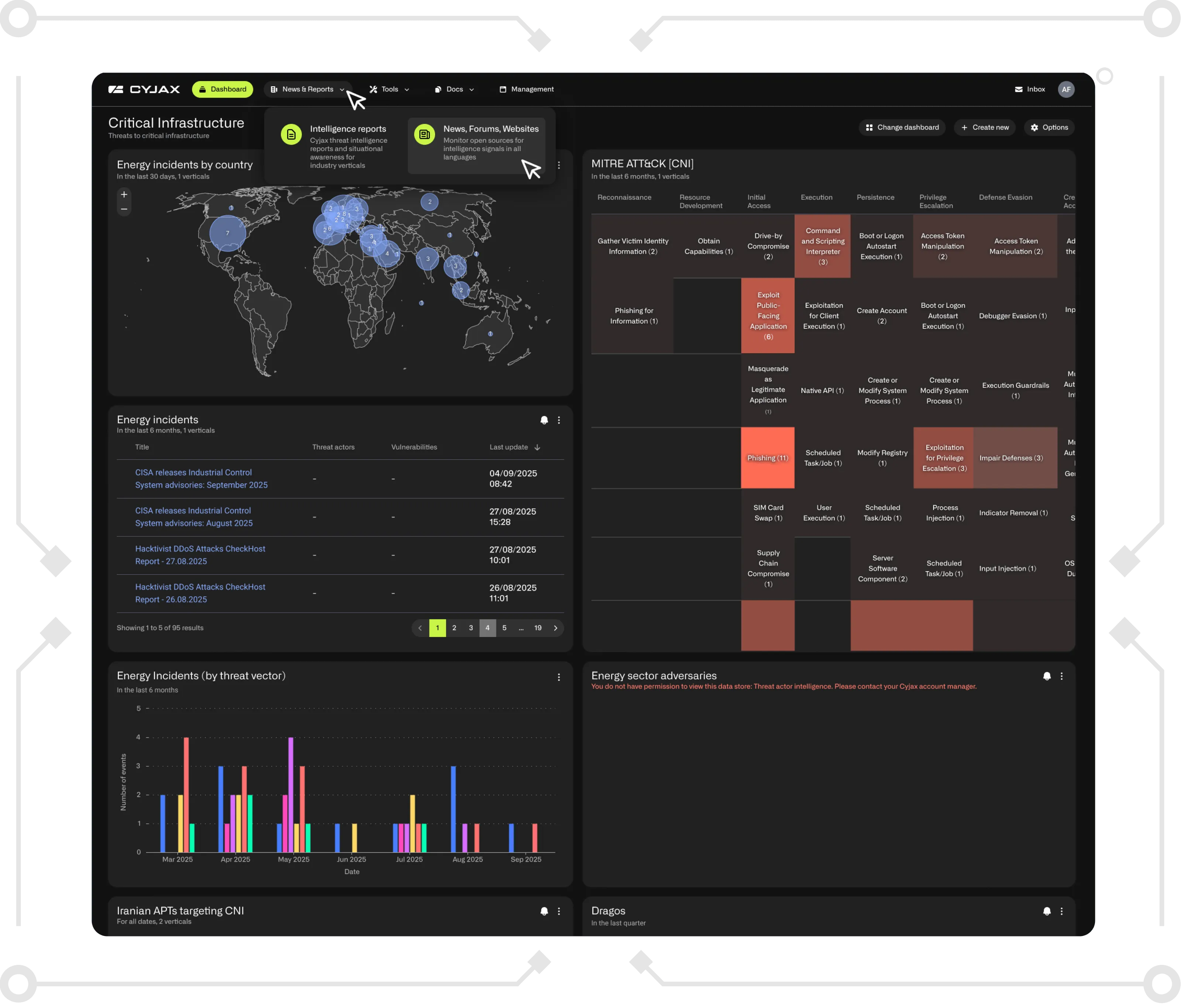
At CYJAX, our work starts with understanding what our customers are facing. Our analysts track threat actor activity, emerging campaigns and discussions across open, deep and dark web sources, turning that information into clear, contextualised intelligence that security teams can act on. Customers use this intelligence not only to strengthen their technical defences but also to brief leadership teams and shape staff awareness around the threats that are genuinely relevant to their sector and their organisation.
As a UK-based, ISO 27001:2022 certified threat intelligence company, CYJAX works alongside customers throughout the year, not only in October. We believe Cybersecurity Awareness Month is the ideal moment for organisations to ask a simple question: is our awareness programme built on assumptions, or on intelligence?
To find out how CYJAX threat intelligence can help your organisation move beyond awareness and towards informed, proactive defence, visit our website or get in touch with our team.
Recommended for you



Get Started with CYJAX CTI
Empower Your Team. Strengthen Your Defences.CYJAX gives you the intelligence advantage: clear, validated insights that let your team act fast without being buried in noise.