One Feed, Many Clients: Running Multi-Tenant Threat Intelligence as an MSSP in 2027
his blog explains what multi-tenant threat intelligence is and why running one intelligence feed across many clients is one of the hardest jobs an MSSP has. It covers how a single compromise can spread across a client base, what MSSPs should look for in intelligence built for many tenants, and how the Cyber Security and Resilience Bill raises the stakes for UK providers.


Key takeaways
- Multi-tenant threat intelligence means collecting and validating intelligence once, then filtering, routing and reporting it separately for every client an MSSP protects.
- A generic feed multiplies noise across a client book. Relevance must be mapped to each tenant's sector, suppliers and technology, or analysts end up doing that work by hand.
- MSSPs and their suppliers are a route into many organisations at once, so the MSSP's own supply chain needs watching as closely as any client's.
- Strict tenant separation, redistribution rights and client-ready reporting matter commercially as much as technically.
- The Cyber Security and Resilience Bill is set to bring medium and large managed service providers under UK regulation, making intelligence-led operations a compliance issue as well as a service one.
Earlier this month, ASOS confirmed it was investigating unauthorised activity involving third-party platforms it uses to communicate with customers, after attackers sent a rogue alert through its app. ASOS said names and contact details may have been accessed, but it did not believe payment card details or passwords were affected. At the time of writing, it had not said how many customers were involved or quantified any effect on trading. The incident is a reminder that the platforms and providers an organisation trusts can become the way in.
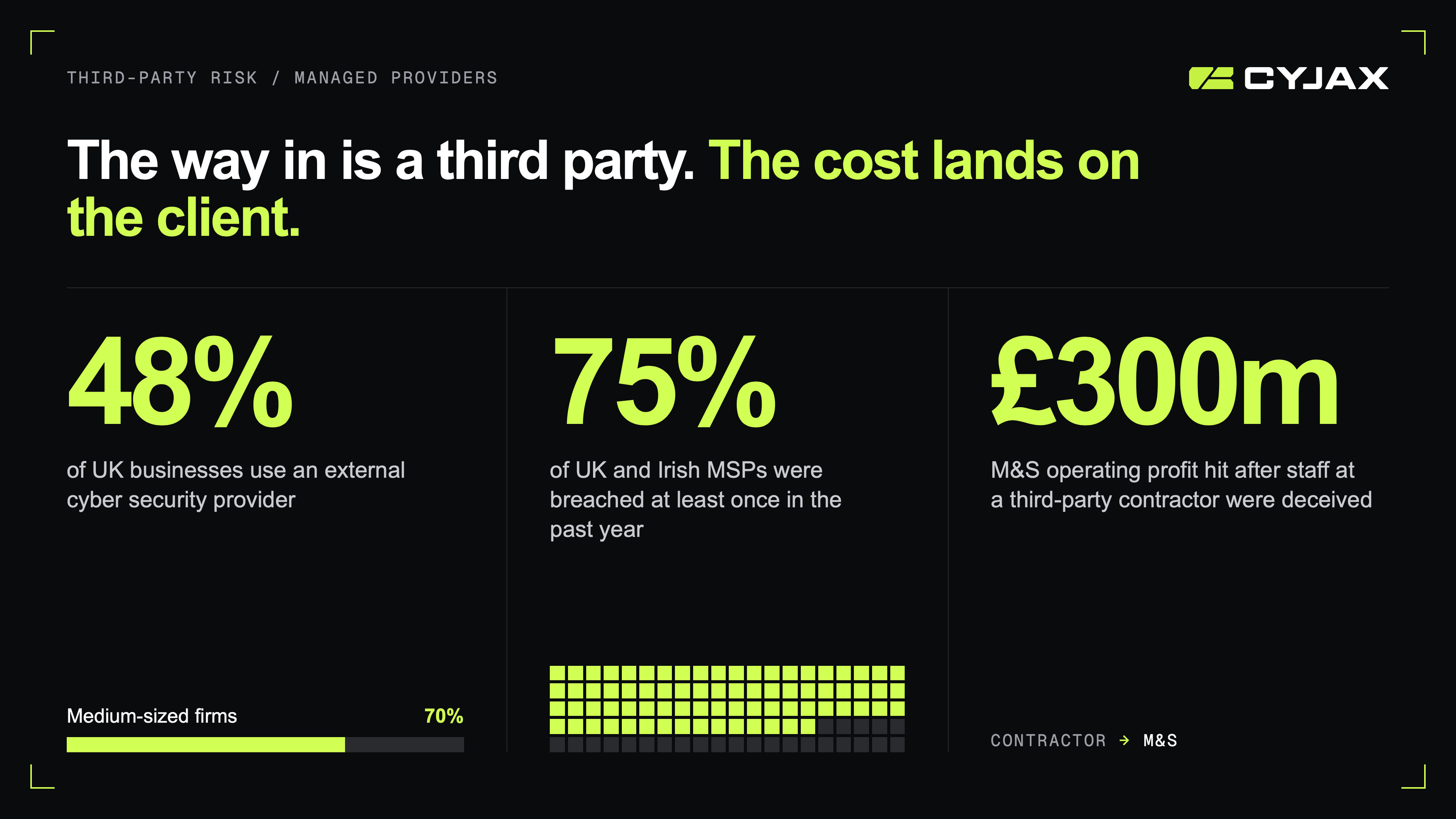
That model now underpins a large share of UK business. 48% of UK businesses use an external cyber security provider, rising to 70% of medium-sized firms, yet 75% of UK and Irish MSPs were breached at least once in the past year. When the way in is a third party, the cost still lands on the client: M&S, whose 2025 attack involved staff at a third-party contractor being deceived, put the hit at up to £300 million in operating profit.
For MSSPs, threat intelligence sits at the centre of this. One intelligence feed has to serve dozens of clients with different sectors, suppliers and risk appetites, without burying analysts or missing what matters to any single client. That makes multi-tenant threat intelligence more than a SOC question. It shapes SLA performance, client retention, margins, what account teams can promise, and how a provider will fare under incoming UK regulation.
What is multi-tenant threat intelligence?
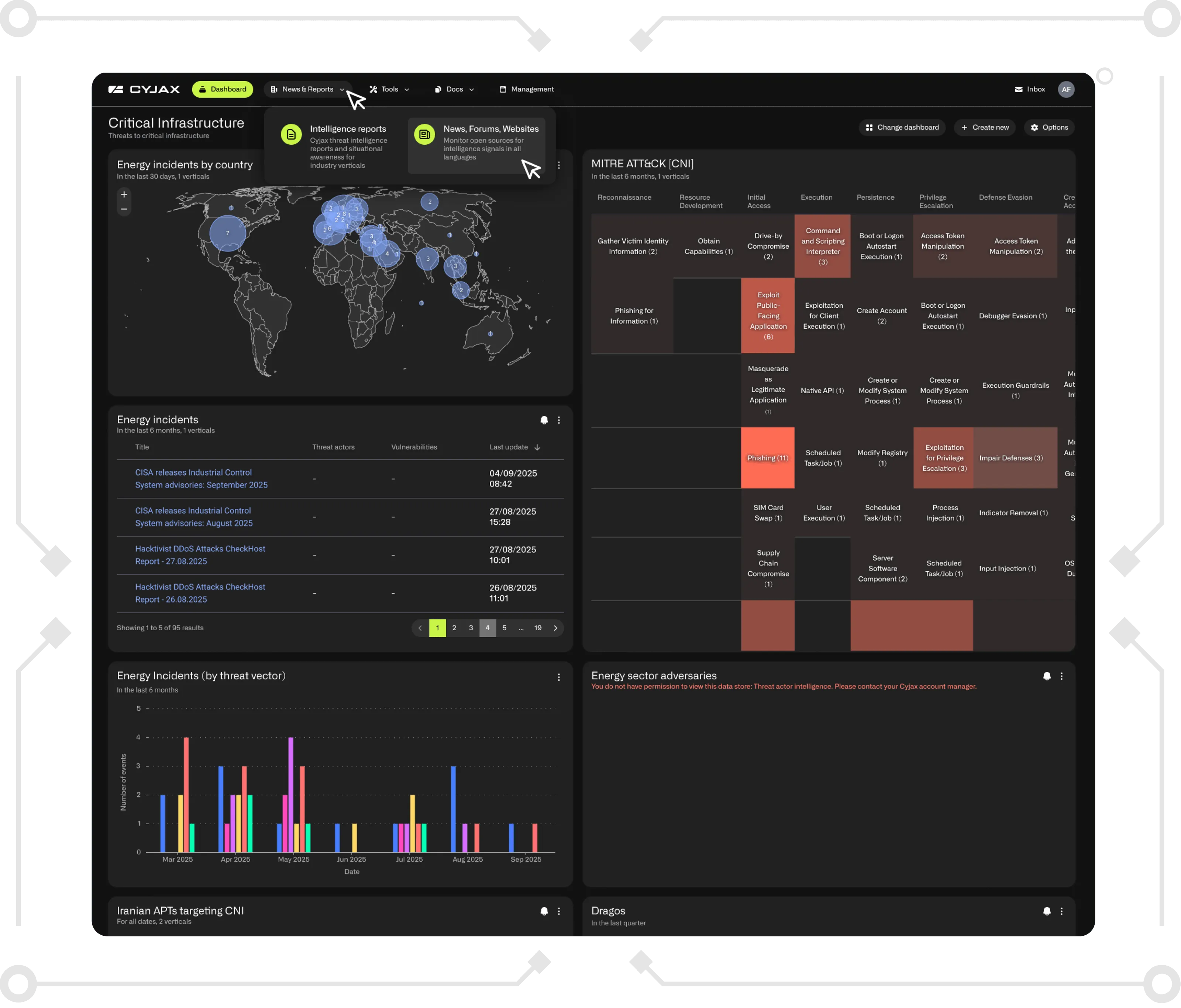
Multi-tenant threat intelligence is a single intelligence capability that an MSSP collects and analyses once, then filters, routes and reports separately for each client, or "tenant", it protects. Each client sees only what is relevant to its own sector, location, technology and suppliers, and its data never mixes with anyone else's.
In practice it works in three layers:
- Shared layer: collection and validation of threat actor activity, campaigns, vulnerabilities and dark web chatter, done centrally by the provider and the MSSP.
- Tenant layer: a profile for each client that decides which intelligence reaches it, how urgently, and in which of its tools.
- Commercial layer: licensing and delivery that let the MSSP pass intelligence to downstream clients legally and at scale, which is one of the top requirements MSSPs have for external CTI.
Why is one threat intelligence feed for many clients so hard to get right?
Because volume multiplies with every client, but relevance does not. Each new tenant brings its own tools, alerts and threat landscape, and a feed that is not mapped to those differences simply adds raw material to an already full triage queue.
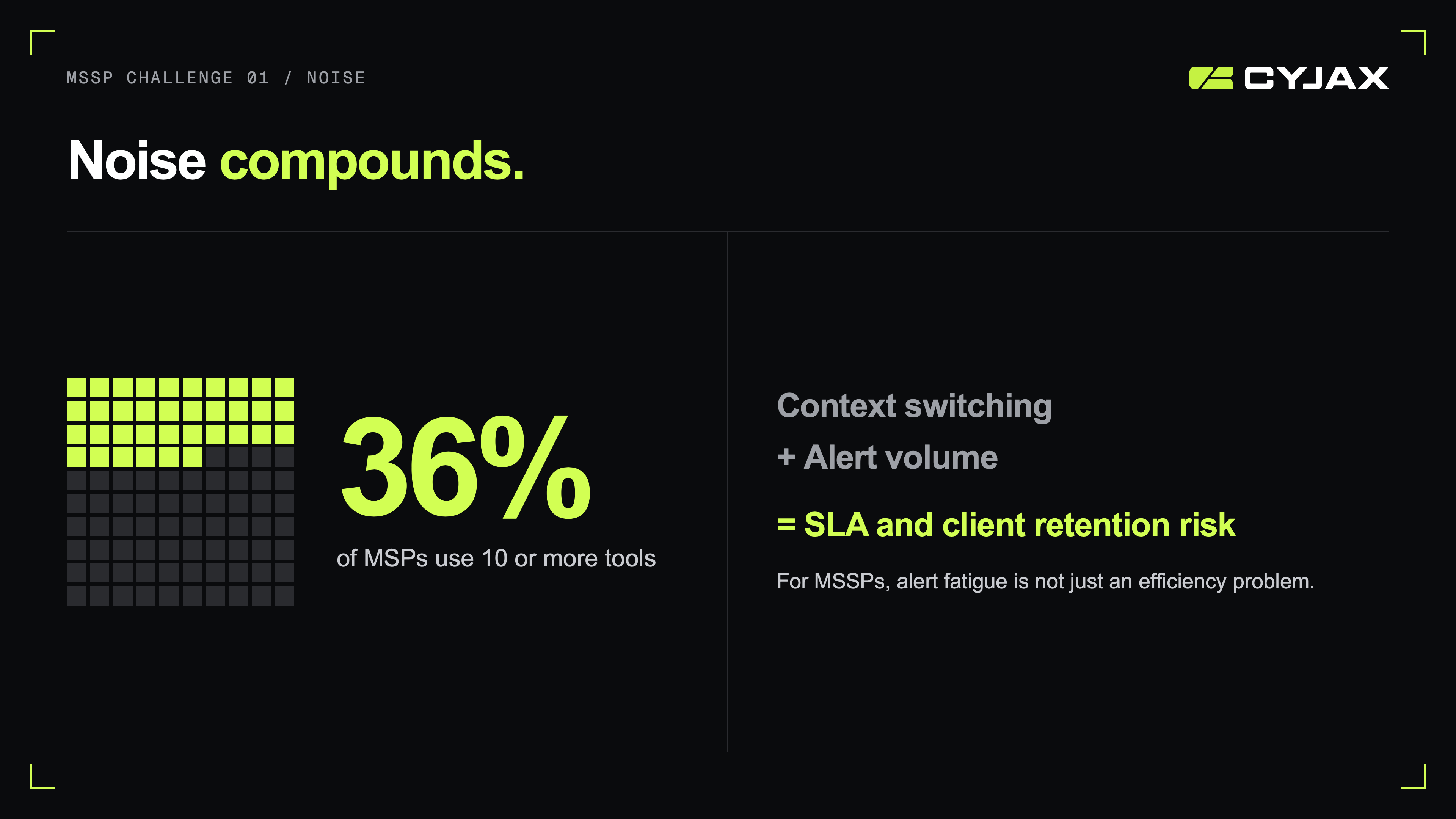
- Noise compounds. Many providers are already juggling large tool stacks: 36% of MSPs use 10 or more tools, which adds context switching on top of alert volume. For MSSPs, alert fatigue becomes an SLA and client retention risk, not just an efficiency problem.
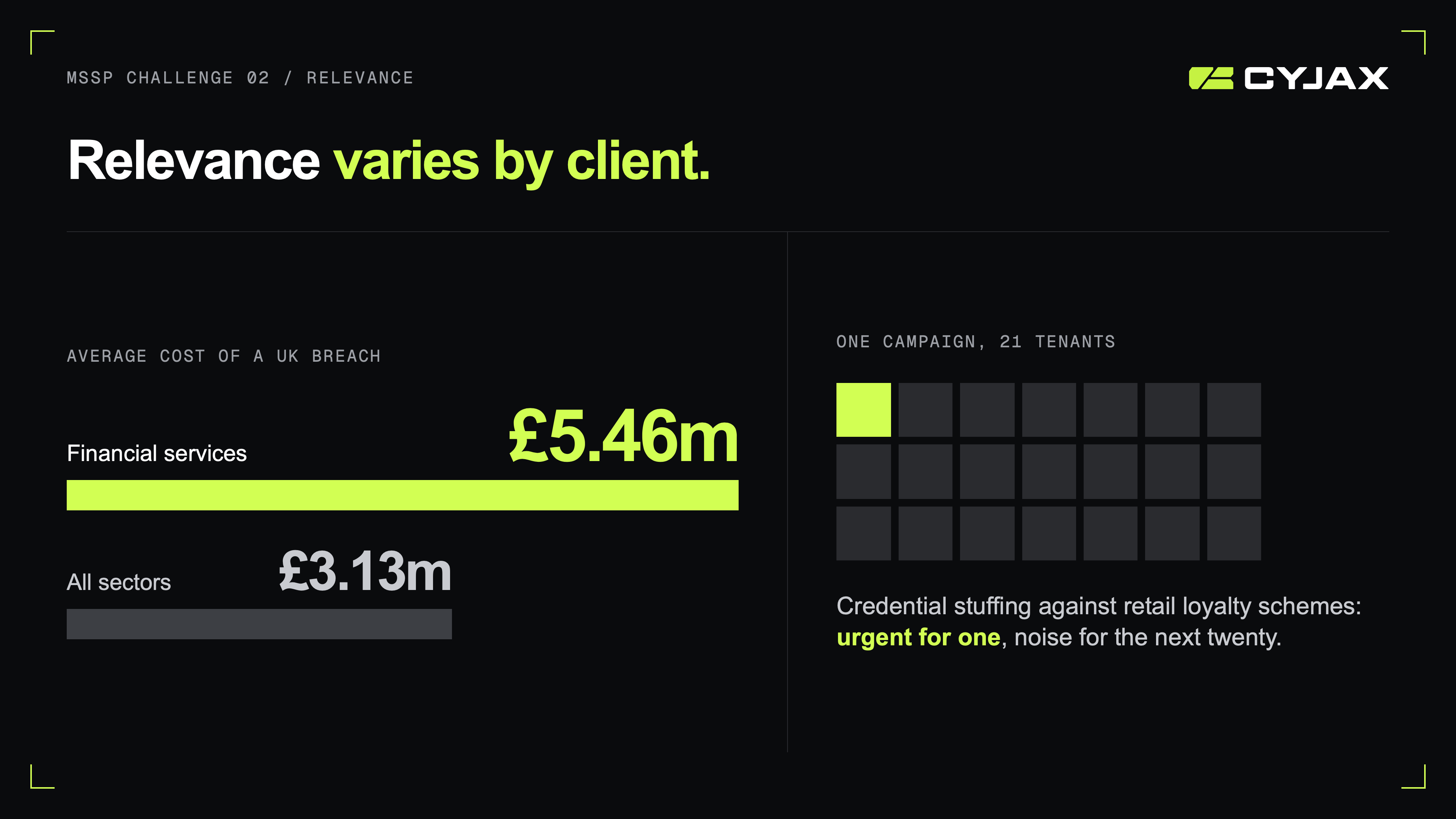
- Relevance varies by client. Risk is not evenly spread: UK financial services breaches cost £5.46 million on average, against an all-sector UK average of £3.13 million. A credential-stuffing campaign against retail loyalty schemes is urgent for one tenant and noise for the next twenty.
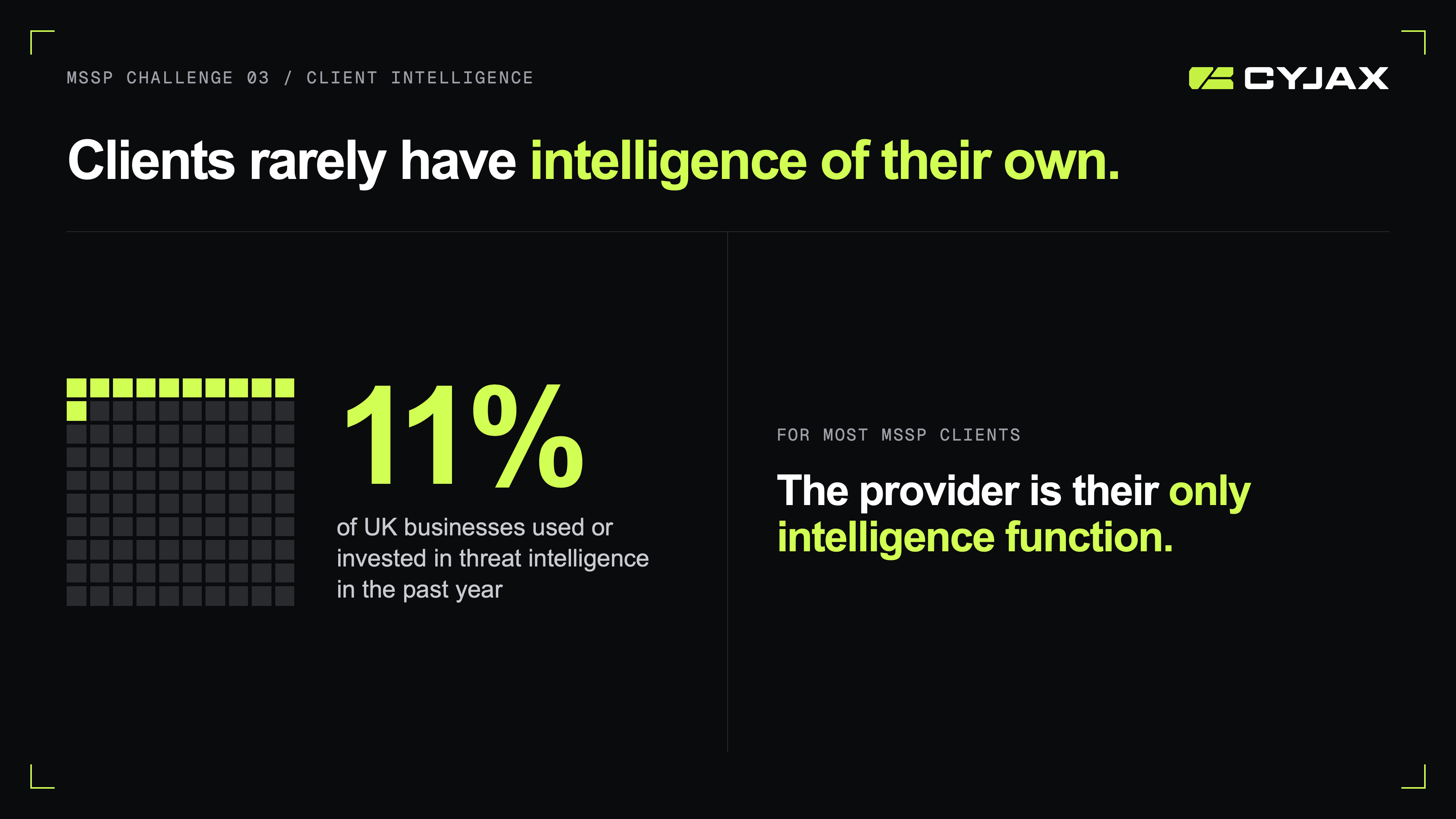
- Clients rarely have intelligence of their own. Only 11% of UK businesses used or invested in threat intelligencein the past year. For most MSSP clients, the provider is their only intelligence function.
We have written in more detail about why MSSPs need threat intelligence that goes beyond a feed.
How can one compromise spread across an MSSP's whole client base?
Through the access an MSSP and its suppliers already hold. Tools and accounts consented into many client environments mean one stolen credential can open several doors.
- Shared tools: a compromised ConnectWise Cloud Backup credential was reportedly used to sign in to 173 Microsoft 365 tenants this month. At the time of writing, any UK impact had not been confirmed.
- Suppliers: two in five MSPs and their clients had an incident tied to a third-party vendor in the past year.
- Ripple effects: the JLR attack cost the UK an estimated £1.9 billion and affected around 5,000 organisations.
In effect, the MSSP is "tenant zero": intelligence on its own suppliers and tools protects every client at once.
What should MSSPs look for in multi-tenant threat intelligence?
MSSPs should look for intelligence that is relevant per client, validated before it arrives, cleanly separated between tenants and easy to turn into client-facing reporting. The six requirements below separate intelligence that scales from intelligence that adds work.
1. Client-level relevance mapping
Intelligence should be tagged by sector, region, technology and supplier, then matched automatically to each tenant's profile, so analysts are not deciding relevance from memory across dozens of accounts.
2. Prioritisation based on real-world exploitation
Look for confidence scoring, deduplication and evidence of active exploitation, not just severity ratings. No MSSP can patch or hunt for everything across every tenant at once.
3. Visibility of shared suppliers and tools
Monitor the RMM, backup, helpdesk and cloud vendors your client base relies on, including leaked credentials and dark web mentions. One supplier compromise reaches every tenant it touches. Our supply chain and third-party risk intelligence is built for this.
4. Strict tenant separation and redistribution rights
Per-tenant filtering, separate API keys and licensing that allows delivery to downstream clients keep each client's intelligence and reporting apart. That protects client trust and contracts, and makes it easier to know exactly which tenant is exposed when an incident hits.
5. Client-ready reporting for boards
Alongside the technical feed, MSSPs need strategic summaries for each client that they can brand and present. Boards increasingly own cyber risk and expect plain-English updates from their provider.
6. Analyst support when demand surges
Direct access to experienced intelligence analysts covers ad hoc questions, deep dives and major incidents, when every client asks the same question on the same morning.
How will the Cyber Security and Resilience Bill affect MSSPs?
The Bill is set to bring medium and large managed service providers under UK network and information systems regulation for the first time. At the time of writing, it had passed the House of Commons in June 2026 and was progressing through the House of Lords, with Royal Assent expected later this year.
What it is expected to mean for in-scope providers:
- Security duties: managing risks to the systems used to deliver services, with commentators expecting the NCSC's Cyber Assessment Framework to be put on a stronger footing.
- Incident reporting: a lower threshold for reporting incidents to regulators and the NCSC.
- Customer notification: telling affected clients when they are likely to have been impacted by a significant incident.
- Detail still to come: thresholds and definitions are expected to be settled through government consultation, so the exact scope for smaller MSSPs had not been confirmed at the time of writing.
For MSSPs, this turns tenant-level visibility from good practice into something regulators may ask to see.
How does CYJAX help MSSPs run multi-tenant threat intelligence?
CYJAX works as an analyst-led intelligence partner for MSSPs, so the validation and contextualisation work happens once, centrally, and is then applied to every client that needs it. Through our MSSP Programme, we provide:
- Validated intelligence: reporting checked by experienced analysts before it reaches your SOC, cutting the noise your team has to triage.
- Sector and client context: intelligence tagged by sector, geography and supplier so it can be routed to the right tenant.
- Supply chain visibility: monitoring of the vendors and tools your client base depends on, including your own.
- Integration-ready delivery: feeds that plug into SIEM, SOAR and ticketing workflows across tenants.
- Flexible, multi-tenant licensing: built for delivering intelligence to downstream clients.
- Analyst access: support for ad hoc questions and surge demand during major incidents.
We already work with UK MSSPs including Cyro Cyber to strengthen the intelligence behind their client services.
Book a demo to see how CYJAX supports a growing client book, or ask an analyst about a threat actor, campaign or exposure affecting your clients.
Recommended for you



Get Started with CYJAX CTI
Empower Your Team. Strengthen Your Defences.CYJAX gives you the intelligence advantage: clear, validated insights that let your team act fast without being buried in noise.